Applications of shielded cable
2 years ago | articles
Familiarity with shielded cables
In the modern world, power and signal transmission plays an essential role in our daily life.
 From the lighting of our homes to the exchange of information in computer networks, everyone
 depends on power and data cables.  But in the meantime, electromagnetic interference (EMI)
like a big barrier, can disrupt the quality of signals and even damage our equipment.
Introduction of shielded cable types
Shielded cable is available in different types and with different protection levels
to meet different needs.
Foil shielded cable: This type of cable uses a thin layer of metal foil for protection
 and is suitable for general applications such as building electrical installations.
Shielded braided cable: In this type of cable, metal strands are braided around the cable conductor,
 providing stronger protection against EMI. This type of cable is ideal for industrial applications
 and noisy environments.
Composite shielded cable: This type of cable uses a combination of foil and metal texture for
 the highest level of protection and is used in sensitive cases such as medical equipment and
 telecommunication systems.
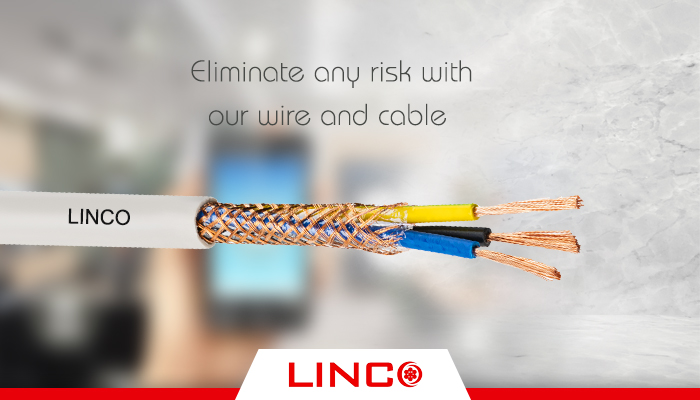
Structure and components of shielded cables
To better understand the performance of shielded cable, let's take a look at its structure.
Conductor: The main core of the cable that is responsible for transmitting the electric
current or signal.
Insulation: A layer of plastic or other material that surrounds the conductor and protects it
from contact with other objects.
Shield: A protective layer made of foil or metal tissue and is responsible for absorbing and
 repelling electromagnetic interference.
Application of shielded cable in different cases
Electrical installations
Audio and video systems
Various industries
Medical equipment
car
Telecommunications: A world without noise in information exchange
Comments
There are no results!
Related News
.jpeg)



Alborz Electric Noor Company (Linco) has a history of nearly two decades of professional activity in the field of producing all kinds of wires, all kinds of flexible cables, semi-dispersed, sector cables, welding cables, concentric and coaxial cables, smart KNX cables and ... and with a variety of more than 180 products and a production capacity of over 18,000 tons per year, Pardak continues its professional production.


All rights reserved for LINCO
